Iran and Afghanistan at a Crossroads: The Current State and What’s at Stake
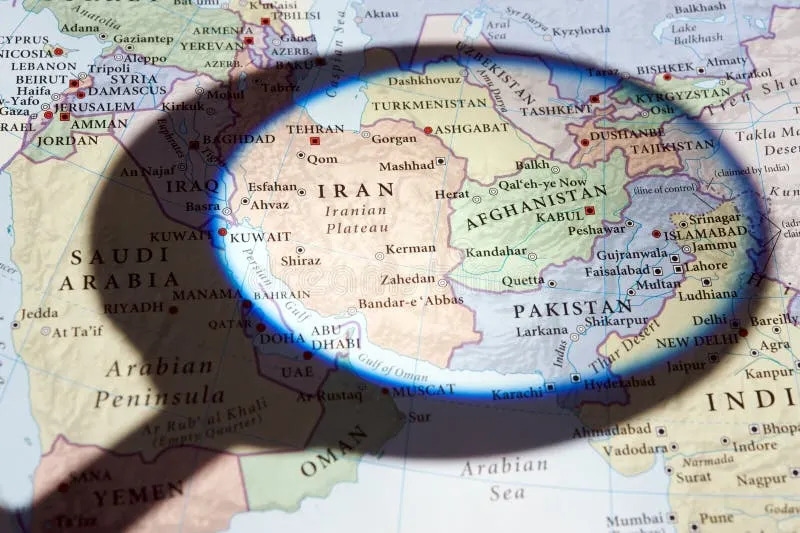
TEHRAN / KABUL -
While diplomatic engagement has increased, formal recognition remains cautious: senior Iranian officials have visited Kabul to raise concerns over shared rivers and refugee repatriation, and both sides publicly reference negotiation tracks that mix trade, infrastructure and water management. At the same time, Tehran has stepped up public pressure over river withdrawals in basins such as the Hari-Rud, framing access as a customary right that must be secured in any durable agreement.
Beneath the diplomatic terrain lie acute domestic pressures that shape policy choices. Iran’s internal water stress and deportation policies have driven a fast-changing dynamic on the border: large-scale returns and expulsions of Afghan nationals have heightened humanitarian concerns and make cooperative border management both more urgent and more politically sensitive. Those humanitarian and security pressures are, in turn, influencing Kabul’s eagerness to expand commercial corridors through Iran.
In practice, the 2025 negotiations are therefore a patchwork of practical deals rather than a single grand bargain: expanded access to ports and trade facilitation in exchange for more predictable cross-border security cooperation and negotiated mechanisms for sharing hydrological data and river flows. Whether these transactional arrangements will evolve into a stable, institution-building partnership — with binding river commissions and joint enforcement — remains an open question.
Why the Relations Matter — and Why Now
Current touchpoint between the two countries revolve around three sensitive pillars:
1. Shared Water Resources
Rivers such as the Hari-Rud and Helmand are becoming strategic lifelines as both countries face growing water scarcity. Iran has repeatedly voiced concern about upstream withdrawals in western Afghanistan, especially as drought intensifies.
2. Trade and Transit
Afghanistan has expressed strong interest in expanding access to Iranian ports, particularly Chabahar and Bandar Abbas, in order to diversify its economic corridors and reduce dependency on other neighbours.
3. Border Security and Counter-Extremism
Tehran is proposing structured intelligence sharing and coordinated border patrols to protect both sides from militant groups operating around the frontier.
According to a senior spokesperson at Iran’s Ministry of Foreign Affairs, “Iran views Afghanistan as a long-term strategic partner, not merely a transit route. Our futures are deeply interconnected, and these negotiations reflect that reality.”
From the Afghan side, an adviser to the Afghan Minister of Trade, echoes this sentiment: “Iranian ports represent a lifeline for Afghanistan’s global trade. In exchange, we are ready to offer cooperation on security, water management, and regional infrastructure.”
Historical Distrust
Decades of shifting alliances, foreign interference, and broken agreements have entrenched mistrust on both sides. Some Afghan leaders fear Iran will use investments to expand influence in western Afghanistan, while Iranian officials remain wary of Kabul’s ability to contain border-area militant networks.
Water: The Most Explosive Issue
Water remains the hardest nut to crack. Hydrologists estimate that even small modifications in river flow could have dramatic consequences for agriculture and local ecosystems.
An Iranian hydrologist notes for Iran Insight Network:
“The Hari-Rud is a fragile basin. A reduction in flow for Afghanistan disrupts irrigation in Herat, but an increase in upstream diversion affects wetlands and water tables inside Iran. A misstep could destabilize both sides.”
Similarly, “The Helmand is becoming a mirror of our vulnerabilities. Both sides know the 1973 Helmand river treaty is legally binding, but they also know the river can no longer be managed as it was in the 1970s.”
What Is Being Negotiated Behind Closed Doors
Sources close to both governments describe several priority projects currently under discussion:
1) A framework for a joint Iran-Afghan River Commission to regulate withdrawals, share hydrological data, and fund groundwater recharge projects.
2) A new Iranian port expansion optimized for Afghan exports of minerals, agricultural products, and textiles.
3) Security cooperation protocols, including Iran providing training, surveillance technology, and shared command centers near key border crossings.
If implemented, these measures could create one of the region’s most integrated bilateral partnerships.
Community Water Management in Western Afghanistan
In the town of Shindand, a joint initiative between Afghan farmers and Iranian NGOs now trains local communities in sustainable water harvesting, micro-irrigation, and conflict-sensitive water allocation.
According to a project coordinator:
“People here don’t want politics. They want predictability — water they can rely on and rules that are fair.”
Environmental Revitalization in Iran’s Sistan-Baluchestan
Regional authorities in Sistan-Baluchestan have proposed a pilot study using seasonal Afghan water flows to restore dried-out wetlands and mitigate dust storms.
Provincial representative told our correspondent:
“Reviving wetlands is not only an environmental project — it’s a security and public health measure. Everyone benefits if the border region becomes more stable and livable.”
These local projects demonstrate that cooperation is possible even as national-level negotiations remain tense.
Scenarios for the Future
1. Optimistic Scenario — “The New Partnership”
A formal agreement establishes a permanent river commission with enforcement powers, new transit infrastructure, and a shared security coordination center. This would unlock investment, reduce border tensions, and stabilize both economies.
2. Middle Scenario — “Partial Integration”
Economic agreements move forward, but water sharing remains unresolved. Pilot projects operate, but without strong oversight, disputes re-emerge periodically.
3. Pessimistic Scenario — “Return to Tension”
Talks collapse over water rights or internal Afghan politics. Border incidents increase, and economic cooperation stalls. Humanitarian pressures in border regions worsen.
Why the World Should Pay Attention
Negotiations between Iran and Afghanistan are not isolated regional technicalities. Their success or failure will influence: regional water security, migration patterns, militant activity near key borders, trade routes linking South Asia, the Persian Gulf, and Central Asia.
Ultimately, it is the border communities — farmers in Herat, families in Sistan-Baluchestan, local councils on both sides — who will feel the immediate impact. Their participation, along with sustained political will, will determine whether the current talks become a turning point or another missed opportunity.