Iran’s Water Collapse: Local Voices, National Risk
A National Emergency with Local Roots
President Masoud Pezeshkian has publicly warned that dams vital for Tehran’s water supply could run dry, an admission that underscores the gravity of a crisis once brushed aside. In July 2025, the government even declared a public holiday in Tehran and ten other provinces, urging citizens to reduce water consumption by 20% as part of emergency conservation efforts.
These dramatic moves reflect a deeper reality: the crisis is not simply a result of an ongoing drought, but a product of decades-old policies, mismanagement, and fragile governance.
The Anatomy of the Crisis
Climate Stress Meets Systemic Mismanagement
Iran has endured a severe multiyear drought that experts argue is the worst in six decades. But as hydrologist and policy analysts repeatedly point out, climate alone does not explain the scale of the catastrophe. In fact, decades of state policies have actively encouraged water overuse.
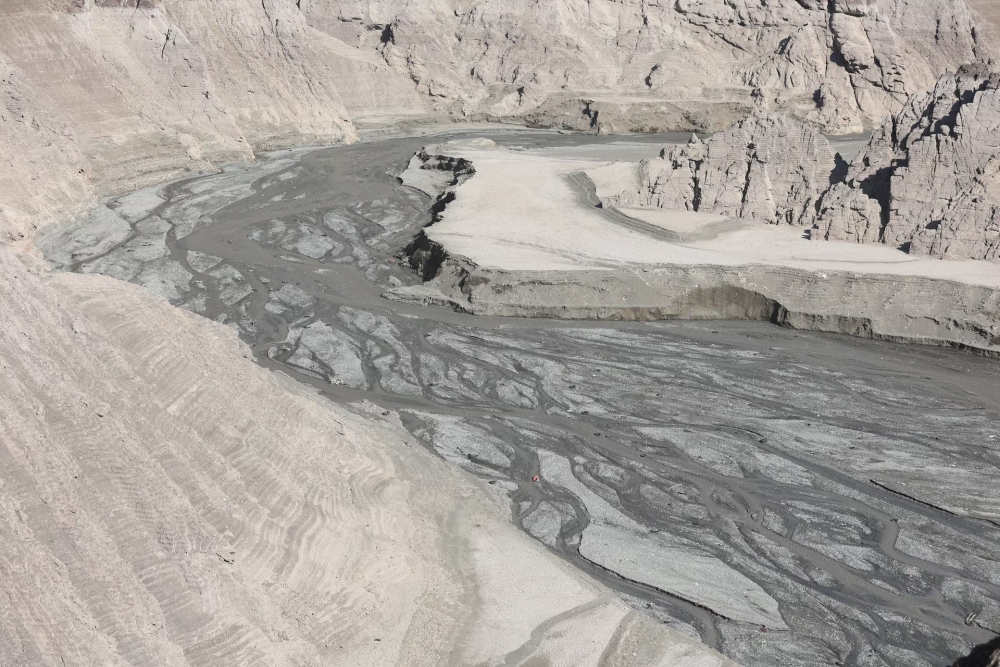
Agriculture, which consumes as much as 80–90% of Iran’s water, remains deeply inefficient. Subsidies continue to support water-intensive crops, even in arid regions. Meanwhile, sprawling dam networks — once envisioned as symbols of progress — now lie almost empty, many operating at just fractions of their capacity.
The Toll on Nature and People
One of the most visible environmental casualties is Lake Urmia, a once-mighty salt lake in northwestern Iran. Now, it is dangerously close to desiccation, largely due to agricultural withdrawal and dam construction upstream. Its shrinkage has wrought ecological havoc: bird populations have plummeted as salt flats expand, and health risks from airborne salts are rising.
Moreover, unchecked groundwater pumping has triggered land subsidence and sinkhole formation. Satellite studies report large swaths of Iran sinking by more than 10 cm per year in some places — notably around Kerman — threatening infrastructure from roads to airports.
Voices from the Ground: Local Engagement & Struggle
While national media highlight the dire headlines, on the ground, local authorities and community leaders are playing a critical role in adaptation — even if their efforts are fragmented.
In Isfahan, farmers have formed cooperatives to pressure regional water management authorities into reallocating water more equitably. These grassroots groups work directly with local officials to explore drip irrigation, crop diversification, and well licensing.
In the Lake Urmia basin, environmental NGOs and local governments are collaborating with academic researchers to model more sustainable water flows. Recent hydrological research from K.N. Toosi University in Tehran, in partnership with Leibniz University (Germany), highlights how land-use change has dramatically reduced either groundwater contribution or surface flow back into the shrinking lake.
Mental health is emerging as a serious concern. A study conducted in rural villages around Lake Urmia found that the state's formal water-allocation systems exclude many farmers. Those without approved permits often operate illegal wells, and their exclusion from government mitigation programs has deepened social and economic distress.
These efforts reflect a tension: local actors know what needs to be done but are constrained by limited resources, regulatory fragmentation, and competing priorities.
Institutional Friction: The Governance Puzzle
At the heart of Iran’s water collapse lies institutional misfit — the hydrological challenges do not align cleanly with administrative boundaries. According to water-governance scholars, many of Iran’s water management agencies operate on scales that do not reflect the basin-based nature of water systems, leading to inefficient coordination.
Parliamentary experts and water-policy analysts frequently cite this as a core challenge: although Iran has built hundreds of dams, its water governance remains fragmented and often politicized.
Meanwhile, local water authorities — such as provincial water resource management councils — attempt to pilot reforms. In some “critical plains” (areas officially designated as over-exploited), regional governments have restricted new well drilling or attempted to cap pumping. But enforcement is uneven, especially when informal (illegal) wells operate alongside licensed ones, creating a two-tier system tolerated in part by officials who lack capacity or political power to shut them down.
Reforming from Below: Pathways Forward
Despite the scale of the crisis, local engagement offers pragmatic points of leverage. Here are key reform pathways — rooted in local-authority action — that could have transformative impact:
Basin-level Water Councils
Strengthen or establish river-basin governing bodies that bring together local councils, farmers, NGOs, and central agencies. These councils can better align water allocation with hydrological realities, rather than political boundaries
Participatory Well Licensing
By working with village-level water committees, water authorities can regularize well usage: offering legal licenses in return for measured pumping, monitoring, and staged buy-backs of high-risk wells.
Nature-based Restoration Projects
In the Lake Urmia region, local governments, supported by environmental groups and universities, can implement managed aquifer recharge schemes, seasonal flow releases, and afforestation to restore the basin’s resilience. For example, optimization models developed by researchers show that increasing surface runoff during filling seasons could help stabilize lake levels.
Rural Support & Crop Transition
Local agricultural extension services, in coordination with provincial water boards, should incentivize farmers to switch to less water-intensive crops and adopt drip or precision irrigation. Financial and technical assistance from local authorities will be crucial to make this politically acceptable.
Community Health and Education
Working with local health departments, councils around dried wetlands should run outreach programs about salt-dust exposure, and mental health services for communities experiencing economic and social stress due to water scarcity.
A Fragile Hope: Lessons from Local Engagement
Iran’s water crisis may be a national emergency, but the most promising solutions are emerging from the grassroots. Where local authorities, academic researchers, and rural communities collaborate, adaptive strategies are taking root: wells are being managed more collectively, risky water use is mapped and moderated, and ecological restoration is being reimagined.
These bottom-up initiatives have the potential not just to mitigate the worst effects of the crisis, but to shift the politics of water in Iran — from short-term survival toward long-term sustainability.
Conclusion
Iran’s water catastrophe is not an act of nature alone — it is a symptom of governance failure, developmental choices, and political inertia. But the growing engagement of local authorities and communities offers a glimmer of hope. If Tehran’s leaders and national institutions are serious about averting a water-system collapse, they must empower and support the local actors who are already doing the difficult work of reform.